What Happens When You Fall Through the Ice? A Real-Time Rescue Demonstration
Every winter, people walk onto frozen lakes, rivers, and ponds — ice fishermen, snowmobilers, hikers, kids taking shortcuts. Most never think about what happens if the ice gives way beneath them. This video does.
Adam from Pike Pole Fishing did something most people would never volunteer for: he fell through the ice on purpose, in real time, without a drysuit, in ten feet of water — with the Edgerton Fire Department standing by. The result is one of the most honest and practical demonstrations of ice rescue you’ll find anywhere.
Watch it below. Then read what it’s actually teaching you.
The First Minute: Cold Water Shock
When you fall through ice into freezing water, your body enters cold water shock immediately. This is an involuntary physiological response — your body gasps uncontrollably, your breathing becomes rapid and erratic, and your heart rate spikes. This response can last one to three minutes. During this window, the danger isn’t hypothermia. It’s drowning. You may involuntarily inhale water. You may lose muscle control. Panic accelerates all of it.
Your entire goal in that first minute to three minutes is to keep your head above water and not panic. That’s it. Nothing else. Breathe. Stay above the surface. Let the shock pass.
This is why Adam repeats it directly into the camera: control your breathing first. Not swimming. Not climbing out. Breathing.
The Next Window: Getting Out
Once cold water shock subsides and you have some control of your breathing, you face the second challenge: getting back onto the ice. And as the video makes viscerally clear — it is brutally difficult.
The ice is slippery. Your muscles are already weakening from the cold. Your wet clothing adds drag and weight. Adam, a fit outdoorsman, struggles visibly even knowing exactly what he’s doing.
The key technique: retrace the path you came in on. That ice held you before, which means it’s more likely to hold you again as you crawl out. Get as much of your body horizontally onto the ice as possible — do not try to stand up. Kick your legs to generate upward momentum and drag yourself forward.
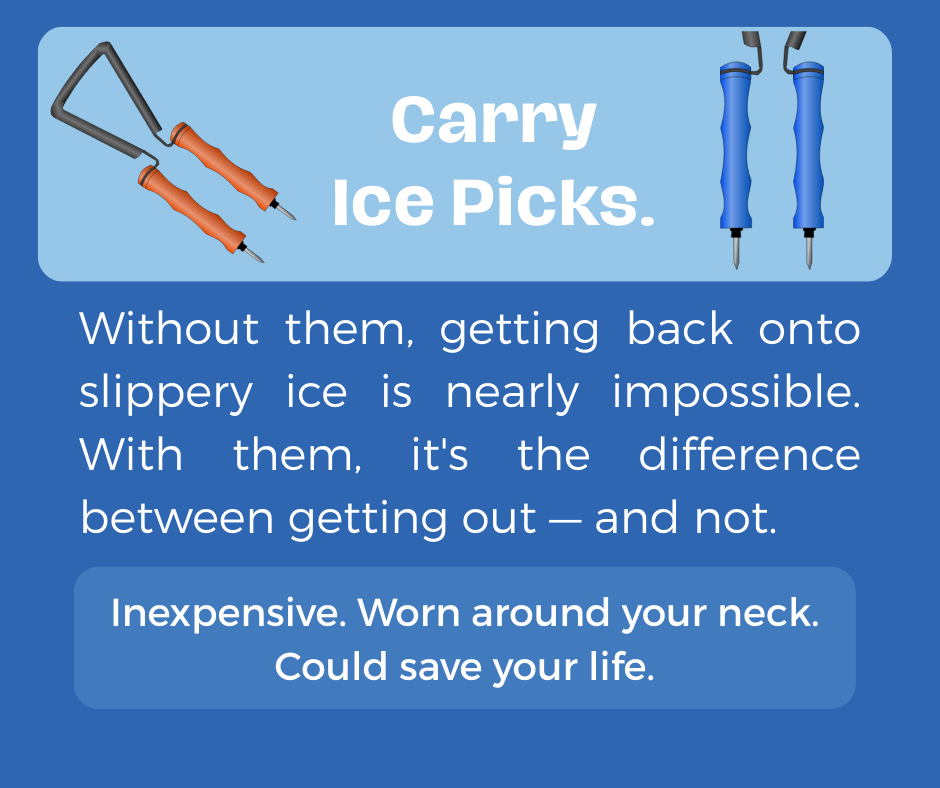
If you have ice picks — two small pointed tools that hang around your neck — use them. The video shows the dramatic difference they make. Without picks, Adam barely manages to get out. With them, the grip is immediate and effective. They are inexpensive, they are small, and they may be the difference between getting out and not getting out. If you spend any time on frozen water, carry them.
You have roughly ten to fifteen minutes from the time of submersion before your muscles lose enough strength to climb out on your own. After that point, you need rescue from outside. The fire department will need to come get you.
What Comes After: Rewarming
Once out, get wet clothing off as quickly as possible. Adam was brought directly into the back of the Edgerton Fire Department ambulance for rewarming. This is not drama — it is protocol. Wet clothing against skin accelerates heat loss even after you’re out of the water. Get dry. Get warm. Get help.
The Rescue Summary — What to Remember
Adam’s closing words from the ambulance are worth repeating here exactly as he said them: control your breathing about a minute or two, then concentrate on getting out. Ice picks — you saw the difference they make. They’re cheap, they go right around your neck. It’s definitely worth purchasing.
That’s the whole lesson in three sentences.
Why We Share This
At Swim Strong Foundation, our work is built on the principle that drowning prevention requires more than swimming ability. It requires situational knowledge of water — understanding how different bodies of water behave, how your body responds to them, and what to do when an emergency unfolds.
Ice water is one of the most unforgiving environments you will ever encounter. People fall through ice every winter across the country. Some survive. Many don’t. The difference is almost always knowledge and preparation — knowing what’s about to happen to your body, knowing the technique, knowing what tools to carry.
This video is real-time, real-life documentation of a controlled but authentic experience. We believe it belongs in every water safety curriculum.
Related Reading on Ice and Water Safety
We’ve covered the dangers of ice and cold water in other posts — including real rescue incidents that underscore why this knowledge matters urgently:
Know Before You Go®
Our Know Before You Go!® curriculum covers exactly this kind of situational water knowledge — seasonal dangers including ice, flooding, rip currents, and cold water shock — for all ages. Learn more at swimstrongfoundation.org.
That knowledge might save your life. Or someone you love.